
Keynote & State of the Art Speakers
Keynote & State-of-the-Art Speakers
This list is not exhaustive, and further information will be added over the coming days and weeks.

BEATRICE VAN DER HEIJDEN - Professor of Strategic HRM at Radboud University, Institute for Management Research, Nijmegen (The Netherlands)
Title of keynote: “No one has ever promised you a rose garden”: On shared responsibility for sustainable careers
Abstract of keynote: Career sustainability is one of the main HR topics in working organisations nowadays. Not only employees themselves but also their managers are responsible for fostering sustainable careers across the working life-span. Given the economic importance of fruitful careers, there is a great need for career research to focus on gaining more insight into different kinds of hindrances and facilitative factors, from a psychological as well as from a societal point of view. Only when we have a better understanding of career influences will we be able to provide structured career support that takes into account both individual, organisational and labour market circumstances. This keynote address shows that both employees and their managers, and other surrounding parties are key stakeholders that have a broad range of career strategies and activities at their disposal. However, careful performance appraisals are needed as well, during which future development opportunities are specifically raised and the 'psychological contract' between employee and employer is constantly safeguarded.
Beatrice Isabella Johanna Maria van der Heijden is Professor of Strategic HRM at Radboud University, Institute for Management Research, Nijmegen, the Netherlands. She is also affiliated with Open Universiteit, the Netherlands; Ghent University, Belgium; UFS Business School, South-Africa; and Kingston University, UK. She is a member of the Academia Europaea; SIGMA Xi: The Scientific Research Honor Society; the Royal Holland Society of Sciences and Humanities; and Knight in the Order of the Lion of the Netherlands. Her research interests include sustainable careers, employability, and aging at work. She has published in among others the Journal of Vocational Behavior, the Academy of Management Annals, Career Development International, and Human Resource Management. Beatrice is Co-Editor-in-Chief for the European Journal of Work and Organizational Psychology. In 2025, she received the Hughes Lifetime Careers Scholar Award of the Academy of Management.
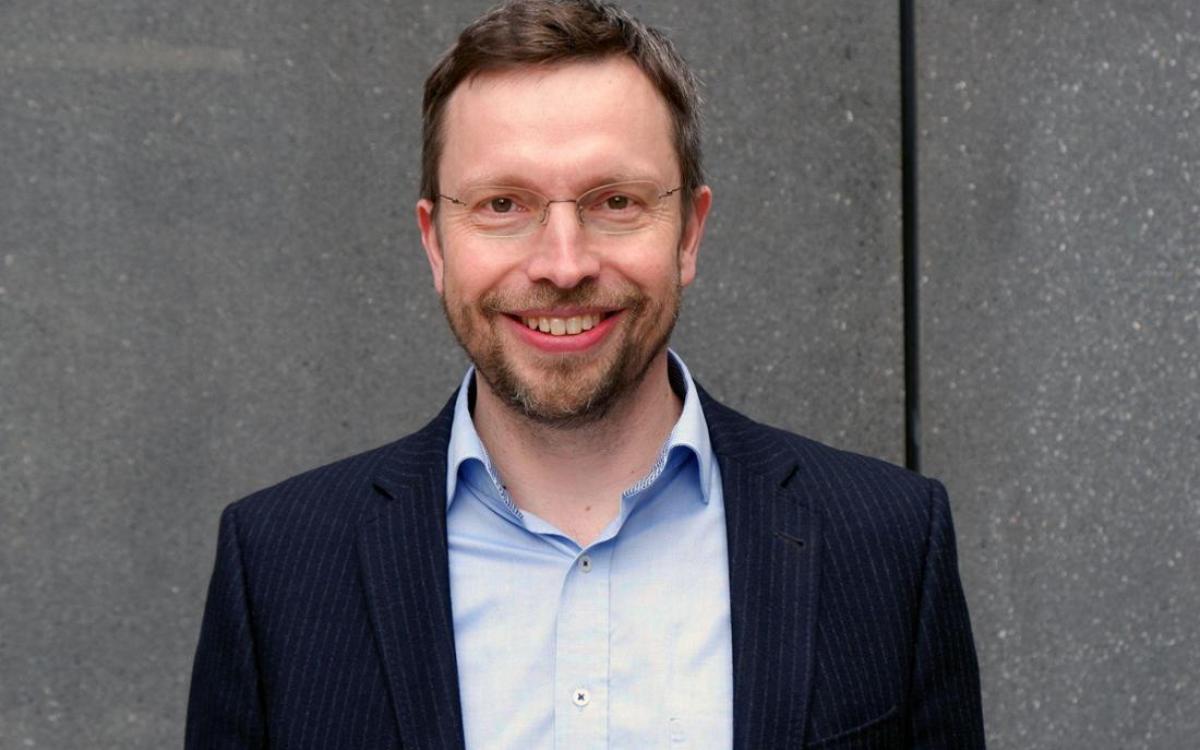
HANNES ZACHER - Professor of Work and Organizational Psychology at the Wilhelm Wundt Institute of Psychology, Leipzig University (Germany)
Title of keynote: Bridging Mitigation and Adaptation: Work and Organizational Psychology in a Changing Climate.
Abstract of the keynote: Climate change presents work and organizations with two related challenges. Mitigation means reducing the greenhouse gas emissions and other environmental impacts of work. Adaptation means protecting workers’ health and performance as heatwaves and other climate-related hazards become more frequent and intense. So far, work and organizational psychology has focused mainly on mitigation, especially on employee green behavior as the core of environmentally sustainable organizations. In this keynote, I will first review what we have learned about the antecedents and consequences of employee green behavior, drawing on longitudinal research on green work characteristics, leadership, climate emotions, and employee wellbeing. I will then turn to adaptation, which our field has only begun to address. I will outline what climate change adaptation at work involves and present results from ongoing research. Finally, I will argue that mitigation and adaptation should be studied together rather than in separate literatures, and I will discuss synergies and tensions between the two. For example, building design or flexible work arrangements can reduce emissions and also protect workers from heat, whereas energy-intensive cooling can increase emissions. In line with the Congress theme, the talk pays particular attention to how organizational practices and technologies can support or undermine both goals. I will conclude with implications for research and organizational practice.
Hannes Zacher is Professor of Work and Organizational Psychology at the Wilhelm Wundt Institute of Psychology, Leipzig University, Germany. He earned his PhD from the University of Giessen and held academic positions in Germany, Australia, and the Netherlands before joining Leipzig University in 2016. His research investigates aging at work and career development, occupational health and wellbeing, proactive and adaptive employee behavior, and the environmental sustainability of organizations. In recent years, his work has focused increasingly on employee green behavior and on how workers and organizations adapt to the consequences of climate change. Together with Kerrie Unsworth, he co-edited the volume Environmental Sustainability in the Workplace (SIOP Organizational Frontiers Series, Oxford University Press). He is Editor-in-Chief of Psychology and Aging and of the German Journal of Work and Organizational Psychology

Professor of Work and Organizational Psychology at the University of Freiburg (Germany)
Title of abstract: Catch it if we can: why the future of work must be anchored in psychology
Abstract: Technology is outpacing us. Driven by advances in AI, technology now drafts, evaluates, advises, and even comforts, raising an uncomfortable question for our field: what role remains for work and organisational psychology when humans appear to matter less and less? In this talk, I will first discuss evidence on AI at work, which is marked by a striking ambivalence. AI can boost individual performance, but it may undermine organisational functioning. It can help us become more capable versions of ourselves, but it can also foster deskilling and dependence. It can help colleagues focus on what matters, but it can also undermine collaboration and cohesion. Looking ahead, I will outline a mandate for work and organisational psychology across and beyond the technology lifecycle, from design and evaluation to implementation and governance, and conclude with a vision of the increasingly central role of (work and organisational) psychology in the next steps of technological evolution beyond AI.
Minibio: Markus Langer is Full Professor of Work and Organizational Psychology at the University of Freiburg (Germany), where he heads the PsyTech Lab. He leads an interdisciplinary research program on human control and understanding, with a focus on human oversight of AI, the trustworthiness of AI, and the sociotechnical design of good AI. He publishes in the most important journals in psychology (e.g. Psychological Science), computer science (e.g. Artificial Intelligence), as well as in high-ranking interdisciplinary journals (e.g. Computers in Human Behavior, npj Digital Medicine), was awarded the Young Investigator Award in Applied Psychology of the International Union of Psychological Science and the Innovation Award of the German Psychological Society, Division Industrial, Organizational and Business Psychology.

